 Nevernevermore
 / Goal app vs habit tracker
Goal app vs habit tracker vs to-do list
Three kinds of app, sold as if they compete, that are answering three different questions. The one you need depends entirely on which part you already have figured out.
We make one of the apps on this list, so read it with that in mind. Here is how we tried to earn the read: every app below is named with what it’s genuinely better at than ours, and where one of them fits your situation better, we say so plainly.
Everything stated about another app was checked on their own site or documentation on 2026-11-14. Apps change. Check theirs before deciding.
People switch between these three for years without noticing they are switching categories. The to-do list gets too long, so they try a habit tracker. The streak breaks, so they go back to the list. Both feel like failures of discipline and neither is.
The useful way to tell them apart is not by features. It is by what each one assumes you have already done before you open it.
A to-do list assumes you know the tasks. A habit tracker assumes you know the behavior. Both assumptions are doing a lot of quiet work.
When either is wrong, the app cannot tell you. It will keep working perfectly, capturing faithfully and counting accurately, while you get no closer to the thing you actually wanted. That is the failure mode nobody warns you about, because from the inside it looks like you are being productive.
How to pick, in one question
- You know the tasks and you lose them
- Use a to-do list. Todoist, TickTick, Apple Reminders. The job is capture, and they are very good at it.
- You know the behavior and you skip it
- Use a habit tracker. Streaks, Habitify, Loop. The job is repetition, and a tracker is the cheapest way to get it.
- You know the outcome and you do not know the steps
- Neither of the above can help you, because that is the one thing both assume you have already done. This is what a goal setting and goal achievement app is for, and it is the category we build in.
The apps
The to-do list
Best for knowing exactly what to do and losing track of it
A to-do list is a capture system. Its real job is that nothing falls out of your head and disappears, and the good ones are very fast at getting something in before you have talked yourself out of it. Todoist, TickTick and Apple Reminders all do this well.
What it asks of you is a complete and correctly ordered set of tasks. You supply those. The app holds them.
Where it stops. It has no opinion about order, dependency or whether the list adds up to anything. You can keep a perfect list for a year and be no closer to the goal, because nothing in it ever asked what the goal was. A long list also starts to read as debt rather than a plan, which is why people abandon them full rather than empty.
The habit tracker
Best for knowing the behavior and needing to repeat it
A habit tracker measures consistency. You name a behavior, it counts how reliably you do it, and the counting is the motivation. For a behavior you have genuinely already identified as the right one, this works, it is cheap, and nothing else is simpler.
Most of them run on streaks, which work by loss aversion: the number is motivating because losing it hurts.
Where it stops. It assumes the behavior is already correct. Meditate daily is a fine habit and it is not a plan for changing careers. The streak is also the exit for a lot of people, because on the day you miss, the app stops being a record of what you have done and becomes a record of what you broke. We went through which trackers handle that well on a separate page.
The goal setting and goal achievement app
Best for knowing the outcome and not knowing the path
This is the category with the least agreement about what it means, and most apps sold under the name are a to-do list with goals as folders, or a habit tracker with a progress bar on top. The test worth applying is simple: does it know anything you did not type in?
A real goal app has to do three things a list cannot. It has to work out the objectives an outcome actually requires. It has to put them in an order, because some things cannot start until others finish. And it has to turn the current step into something small enough to do today.
Nevernevermore is ours, so weigh it accordingly. You name an ambition at any scale and the objectives, milestones and daily missions get worked out for you, sized to the time you say you have that day. There are no streaks, and what accumulates is a collection of cards for the things you actually did, rather than a score for turning up.
Where it stops. It is more app than you need if you already know your steps, and it is a subscription at $10 USD a month or $60 USD a year with no free tier, while good to-do lists and habit trackers are free. If the honest answer is that you know exactly what to do and simply are not doing it, a tracker is the cheaper tool and you should use one.
Why habit tracking became the default answer
Habits are easier to build software for. A behavior repeats on a schedule, so it fits a row in a database and a number that goes up, and the whole category followed the thing that was straightforward to build rather than the thing people were asking for.
It also followed a genuinely good idea. The argument that you should focus on systems rather than goals is correct about something real: outcomes you cannot control make a miserable scoreboard, and the daily behavior is what you actually have in your hands. That is true.
What got lost is that it only works once you know which behavior. Someone who wants to change careers does not have a consistency problem. They have a sequencing problem, and no amount of ticking boxes produces a sequence. Most people arriving at a habit tracker have the second problem and are handed a tool for the first.
And a ticked box leaves nothing behind. A year of perfect consistency gives you an empty list and a number, which is a strange reward for having changed your life.
See it
One goal in. A quest out.
Tell the Raven a goal and it draws your whole path. Every morning, a sealed envelope of side quests sized to the time you have. These are the real screens, start to finish.
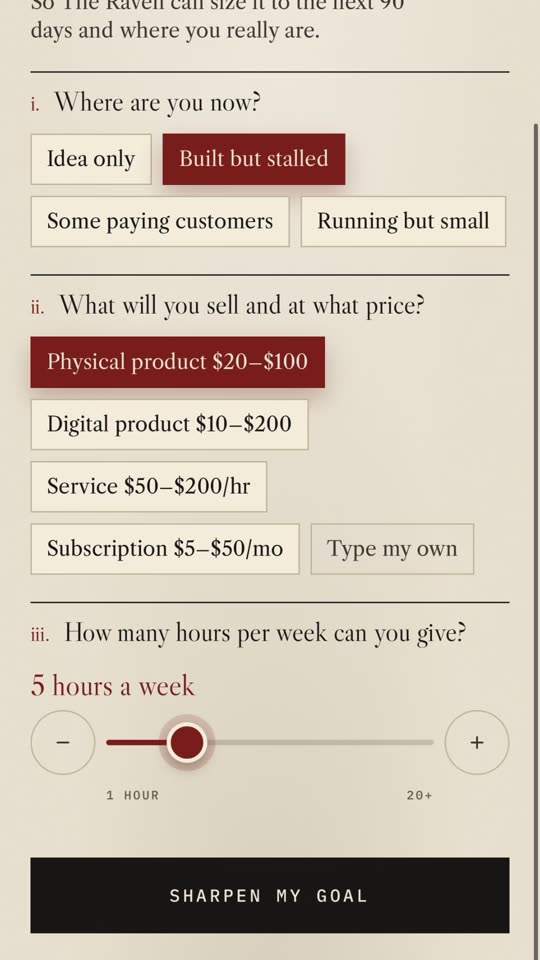
Tell the Raven what you want
It drafts your objectives and milestones. Keep what fits and choose your finish line.
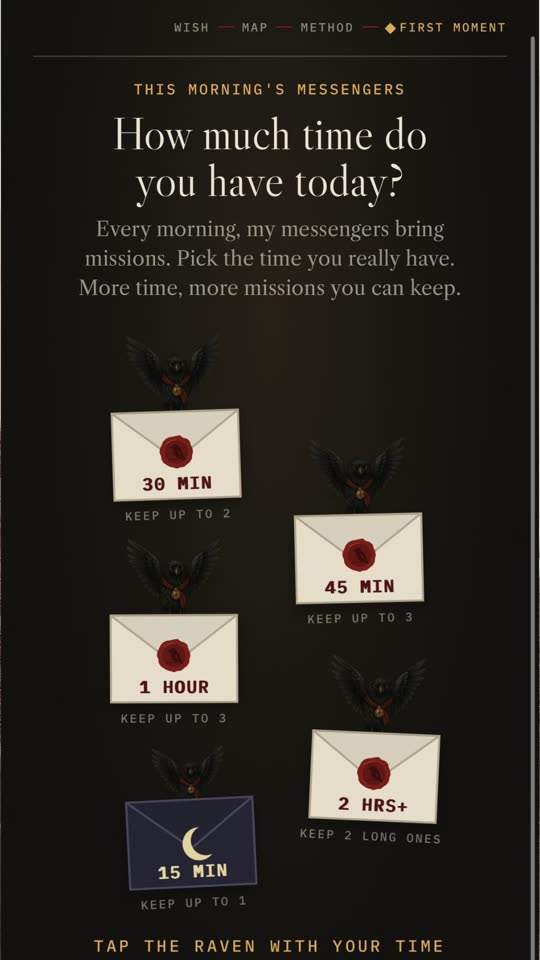
Only got 15 minutes? It still counts
Pick the time you have and your missions are sized to fit. Small days still move the quest.
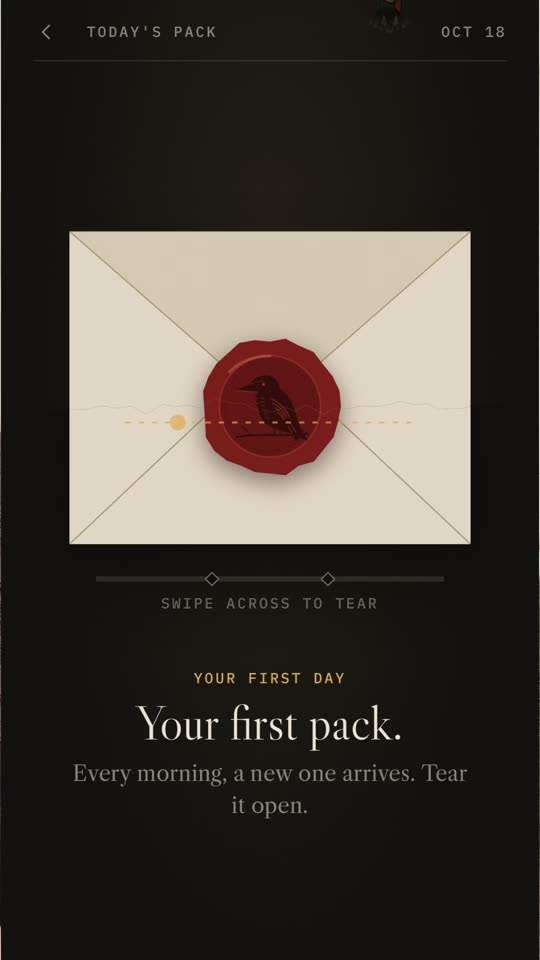
Break the seal each morning
A fresh envelope of side quests, written for where you are on your path.
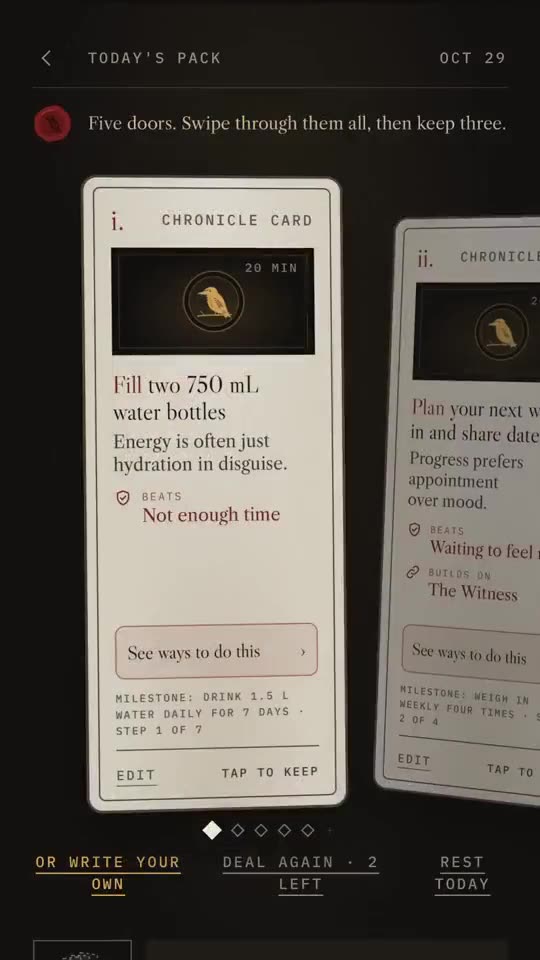
Keep what fits today
Swipe through the missions and keep at least one, or write your own.

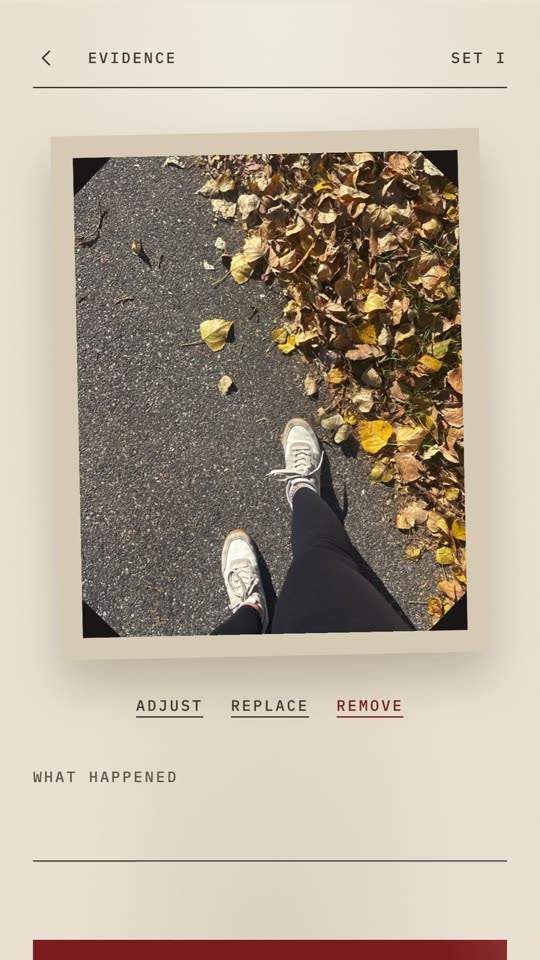
Do the thing for real
Go do it, then snap one photo of the moment as proof.
Keep the card
Hold the seal and your moment becomes a card. Keep the real photo or let the Raven illustrate it.
Why this one sticks
Other habit apps hand you an empty list. The raven hands you a quest.
Tell the raven any goal
Join 3,240 members who have started a path since launch on October 21, 2026. Build your whole path and see it before deciding on a pass.
$10 USD a month, or $60 USD a year
Build my pathDo the thing. Keep the proof forever.
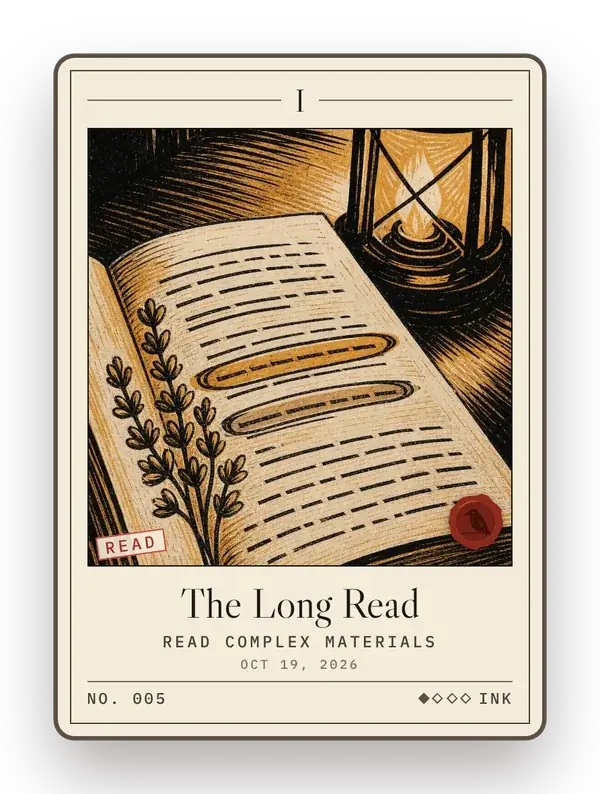
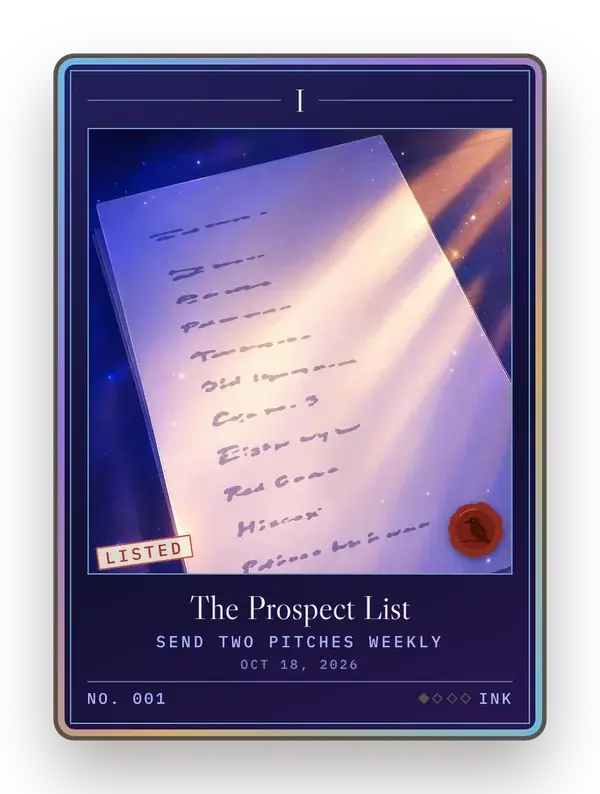
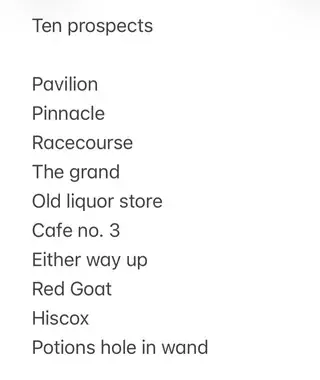
Every card has a name, a date, a serial number and a rarity, made from a moment someone actually lived. Here is the real photo next to the card it became.
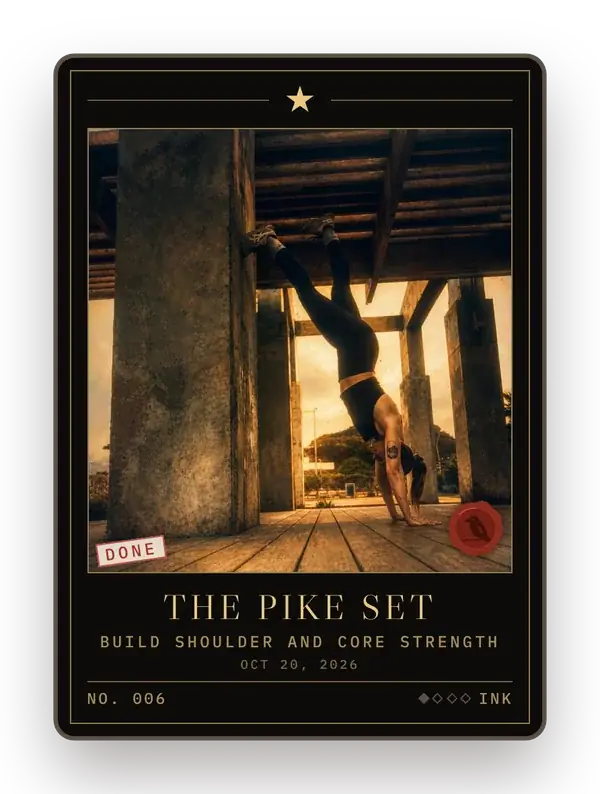
 Real photo

 Real photo
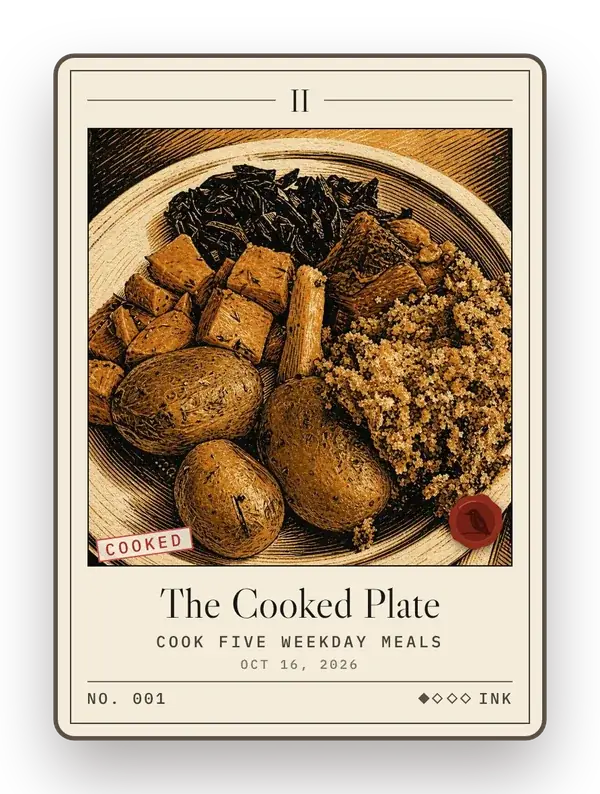
 Real photo
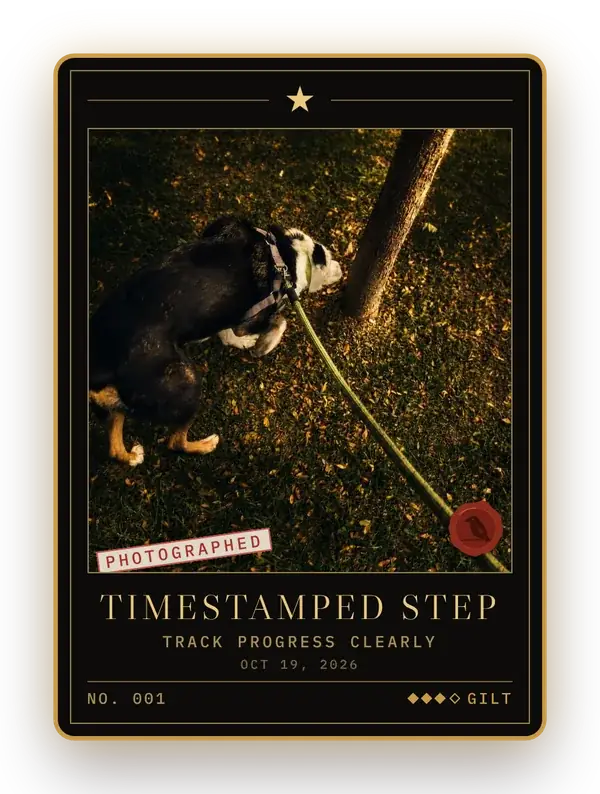
 Real photo
 Real photo
 Real photo
Questions people ask
What is the difference between a goal setting app and a habit tracker?
A habit tracker measures how consistently you repeat a behavior you have already chosen. A goal setting and goal achievement app works out what the behaviors should be. The tracker assumes the hard thinking is done and helps with follow-through; the goal app does the thinking and then hands you today's piece of it. If you already know what to do, a tracker is cheaper and simpler. If you do not, tracking better will not help.
Is a goal app just a to-do list with goals on top?
Many of them are, which is a fair thing to be suspicious of. The test is whether the app knows anything you did not type in. If every objective, milestone and step came out of your own head and the app is only storing them in folders, it is a to-do list with a goal label. A real one has to derive the objectives from the outcome, put them in an order that respects what depends on what, and size the current step to the time you have.
Should I use a habit tracker or a to-do list?
A to-do list if your tasks are one-off and you lose them. A habit tracker if the behavior repeats and you skip it. The two solve genuinely different problems and plenty of people run both, a list for projects and a tracker for the daily things. If neither has worked for you across several attempts, the problem is usually that you do not yet know what belongs in either one.
Are goals or systems better?
The case for systems is right about something real: you control the daily behavior and you do not control the outcome, so the behavior is the better thing to hold yourself to. The gap is that a system is only useful once you know which behaviors the goal requires. For a sequencing problem, like changing careers or finishing a book, the system has to be derived from the goal before it can be practiced. Both, in that order.
What should I use if I do not know the steps to my goal?
Not a habit tracker and not a to-do list, because both ask you to supply exactly the thing you are missing. You want something that produces the objectives and their order from the outcome. That is what Nevernevermore does, and it is the reason we describe it as a goal setting and goal achievement app rather than a habit tracker.
Can I use all three?
Yes, and the split that works is by what each one is good at. The goal app decides what this week has to contain, the to-do list holds the one-off tasks that come out of it, and the habit tracker handles the few behaviors you have already settled and just need to repeat. The mistake is using all three for the same job and then wondering why none of them stuck.
Tell the raven any goal
Build your whole path and look at it before deciding on a pass. $10 USD a month, or $60 USD a year.
Build my path